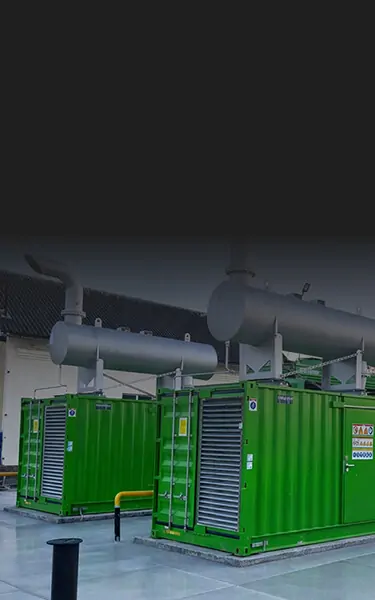
Industrial cogeneration units produce electricity and useful heat simultaneously within a single energy complex. The recovered thermal energy can be used for space heating, domestic hot water or industrial processes. Cogeneration is most suitable for facilities with a stable, simultaneous demand for electricity and heat. The configuration is selected according to the operating profile of each facility. Teploformat Engineering provides cogeneration unit design, equipment supply, installation, connection and commissioning.
How a Cogeneration Unit Works
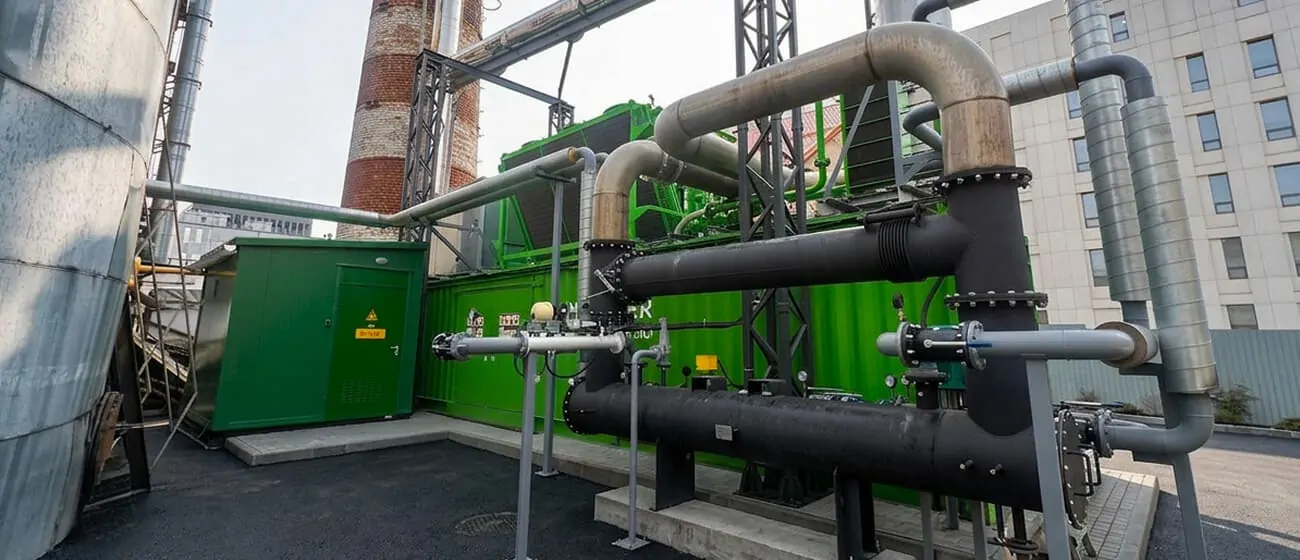
In a gas-engine or gas-turbine cogeneration unit, the engine or turbine drives a generator to produce electricity. Heat from the cooling system and exhaust gases is not wasted: a heat recovery system captures it and transfers it to consumers through heat exchangers.
The recovered heat can be used for heating, domestic hot water, process water heating or steam generation. Automation coordinates electrical and thermal loads, controls auxiliary equipment and synchronises the unit with the power grid.
Electrical, thermal and overall efficiency depend on the technology, unit capacity, operating mode and actual utilisation of the recovered heat.
When Cogeneration Is a Practical Choice
A high level of electricity consumption alone does not justify a CHP project. The electrical and thermal loads must also occur at the same time. Industrial cogeneration units can be suitable for manufacturing facilities, agricultural and biogas complexes, greenhouses, hospitals, hotels, shopping centres, water utilities, wastewater treatment plants and district heating systems.
Important conditions include a stable base load, a high number of annual operating hours, predictable fuel availability and the ability to use heat outside the heating season. High electricity prices, limited reliability of the external power supply, a demand for process hot water or steam, and access to biogas may provide additional justification.
If a substantial amount of recovered heat must regularly be rejected into the atmosphere, the economic performance of the cogeneration project will decline.
How to Select the Right Capacity
A cogeneration unit should not be selected only according to the facility’s maximum electrical demand. The engineering assessment should consider the hourly electricity consumption profile, daily and seasonal heat demand, minimum base load, peak values, required heat-transfer fluid temperature and demand for process steam.
Other factors include acceptable operation at partial load, the ability to export electricity or the need to restrict export, as well as planned facility expansion.
In many cases, it is more practical to size the unit according to the base electrical or thermal load. This enables it to operate for a sufficient number of hours without frequent shutdowns while the generated energy is consumed directly on site.
Which Gaseous Fuels Can Be Used?
A gas-fired cogeneration unit most commonly operates on natural gas with stable characteristics. A broad range of gas-engine and gas-turbine equipment is available for this fuel. Where necessary, the heat source can be combined with a gas-fired boiler plant to cover peak loads.
A biogas cogeneration unit may be suitable for agricultural enterprises, landfills and wastewater treatment facilities. Before selecting the equipment, the gas composition must be analysed and an appropriate treatment system designed. This may include controlling moisture, hydrogen sulphide, siloxanes and other impurities.
Biomethane, LPG and other gaseous fuels may only be used after the equipment manufacturer has confirmed compatibility. Fuel composition, calorific value and knock resistance must meet the manufacturer’s requirements.
Gas-Engine or Gas-Turbine Unit?
Gas-engine cogeneration units are widely used in the small and medium capacity ranges. They support modular expansion and can operate relatively flexibly under changing loads, making them suitable for many industrial and commercial facilities.
Gas-turbine units are generally considered for higher capacities and systems requiring a substantial amount of high-temperature heat. They are frequently used in energy centres and large industrial systems.
The choice of technology depends not only on electrical capacity but also on the required heat parameters, available fuel, operating schedule, site conditions and maintenance requirements.
Grid-Parallel and Stand-Alone (Island) Operation
During grid-parallel operation, the cogeneration unit is synchronised with the external power grid and covers part or all of the facility’s current electricity demand. If electricity export is not permitted, the control system prevents or limits surplus electricity from being fed into the grid in accordance with the approved connection arrangement.
In island mode, the cogeneration unit supplies a dedicated internal network. In backup operation, it can support specified critical loads. However, not every cogeneration unit will automatically continue operating if the external grid fails.
This functionality requires island-mode capability, suitable protection systems, automatic grid separation and sufficient ability to accept variable loads. In some cases, black-start capability is also required. The applicable grid connection and operating requirements must be determined separately for each project.
Using the Recovered Heat
Recovered heat can be used for space heating, domestic hot water, drying, raw material preheating, maintaining process temperatures, steam generation or supplying heat to neighbouring facilities.
The thermal system may include heat exchangers, buffer tanks, emergency cooling equipment and multi-fuel boiler plants for backup and peak-load coverage.
Cogeneration and Trigeneration
Trigeneration supplements the production of electricity and heat by producing cooling through an absorption chiller. This solution may be suitable for food-processing plants, cold-storage facilities, hospitals, hotels, shopping centres and buildings with substantial summer cooling demand.
Trigeneration makes it possible to use recovered heat during periods when space-heating demand is lower, helping maintain a more consistent thermal load throughout the year.
What Determines Economic Performance?
The economic result depends on the cost and reliability of fuel supply, the price of electricity displaced by on-site generation, the amount of heat used beneficially, annual operating hours and the unit’s actual load profile.
The assessment must also include maintenance costs, operating hours before major overhaul, grid connection expenses, backup equipment, taxes, applicable charges and total capital expenditure.
For this reason, the payback period can only be determined after an individual technical and economic assessment and comparison of suitable configurations. Examples of completed engineering projects are available in the Teploformat Engineering portfolio.
Automation, Monitoring and Safety
The control system monitors the engine or turbine, fuel supply, electrical load, thermal circuit and grid synchronisation. It can provide emergency load shedding or shutdown, alarm notifications, operating data storage and remote monitoring. Integration with a building management system or SCADA can also be provided where required.
The project must also address ventilation, exhaust gas removal, noise, vibration, fire safety and environmental requirements. Scheduled maintenance is planned according to the manufacturer’s recommendations and actual operating conditions. Further information about technical support is available in the Warranty and Service section.
Teploformat Engineering Cogeneration Units
When designing cogeneration units in Ukraine, Teploformat Engineering collects the required input data and analyses electrical and thermal load profiles together with the characteristics of the available fuel. The engineers develop an energy balance, conduct a technical and economic comparison, and select the appropriate technology, electrical capacity and thermal output.
Teploformat Engineering designs the thermal and electrical systems, supplies the equipment, performs cogeneration unit installation, and handles connection and grid synchronisation.
The scope of work also includes commissioning, automation configuration, personnel training and service support. A modular cogeneration unit is adapted to the site, existing utility networks and required operating mode.
For a preliminary assessment, provide hourly or monthly electricity and heat consumption data, information about the available fuel, thermal system parameters and the required mode of operation with the power grid.
Complete the preliminary assessment form, and the Teploformat Engineering team will prepare an energy balance and propose a technically justified configuration.




 Thermal capacity
  Fuel type
  Configuration
  Operating modes
  Turnkey supply
  Electrical output
  Heat-transfer fluid
  Electrical efficiency
  Overall efficiency
  Noise level
  Service life and maintenance intervals
  Environmental performance
  Digital infrastructure


