Block-Modular Boiler Plant: Design, Operating Principle and Applications
A block-modular boiler plant provides a compact way to generate heat for space heating, domestic hot water or process requirements. The equipment is installed in one or more factory-assembled modules.
After delivery, the modules are positioned on a prepared site, connected to one another and linked to the external utilities. This is not a separate fuel-based category of boiler plant: it is primarily a method of construction and equipment arrangement.
What Is a Block-Modular Boiler Plant?
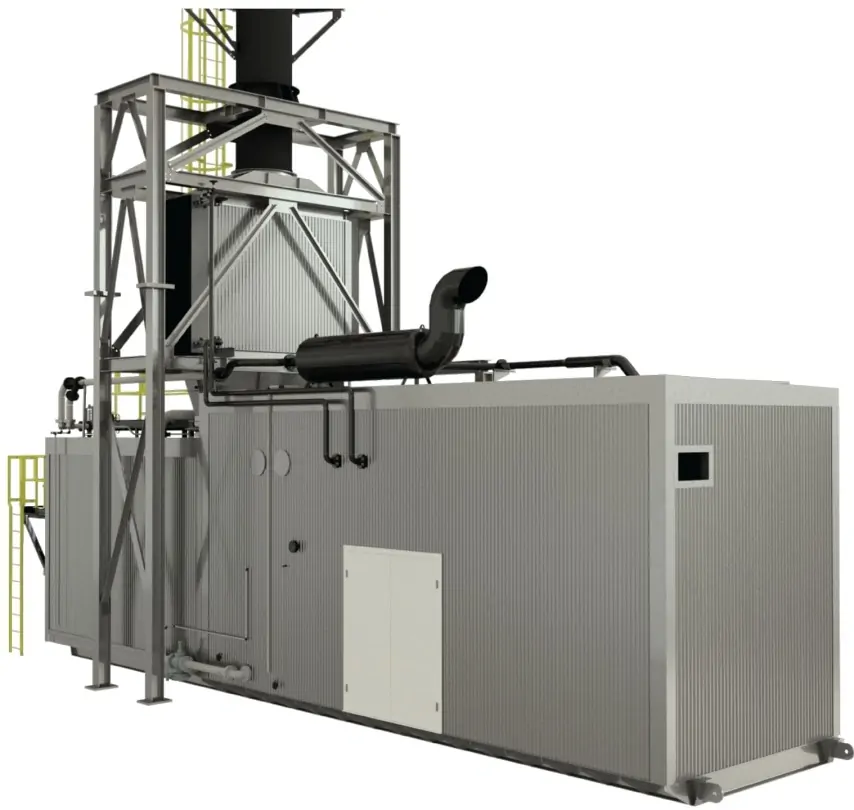
A block-modular boiler plant is a heat-generation complex with a high degree of factory completion, in which the equipment is installed in one or more purpose-designed modules. It can provide space heating, domestic hot water, steam or process heat and operate as a primary, peak-load or backup source. Its functions are defined by the approved design.
A stationary boiler plant is normally located in a building constructed or adapted on site. A modular boiler plant is delivered as prefabricated modules with a substantial proportion of the systems already installed.
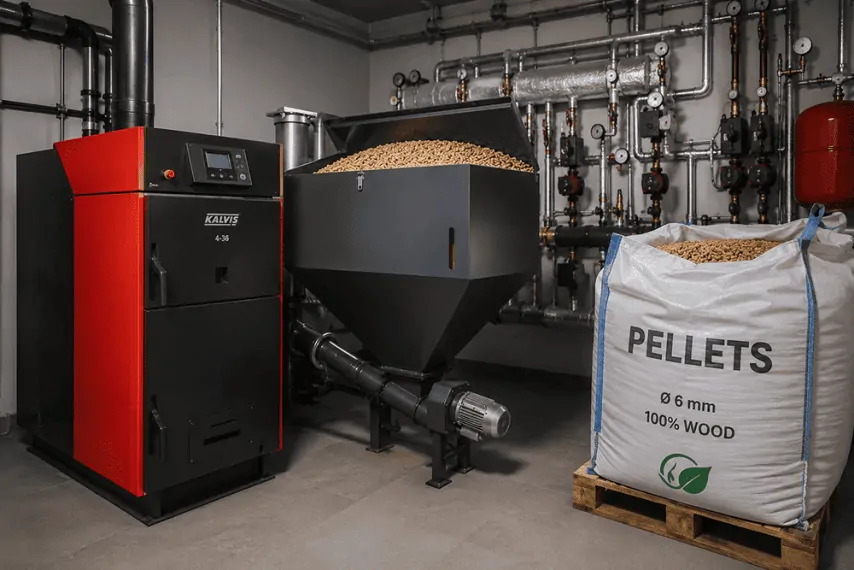
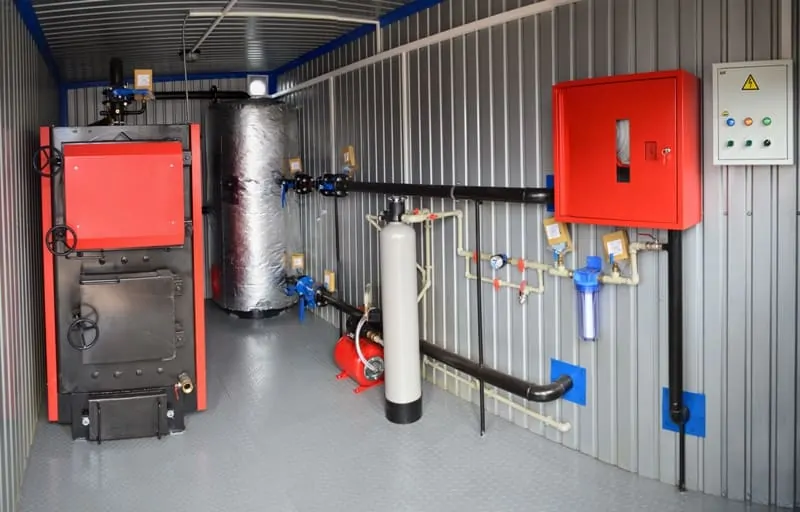
A containerised boiler plant is a compact form of modular construction. A transportable or mobile plant is designed to allow relocation. However, not every block-modular plant can be moved without dismantling, reconnection, inspections and the procedures required at its new location.
What Does the Boiler Plant Comprise?
The configuration depends on the required capacity, fuel, heat-transfer medium, operating profile and site conditions. A typical list of components should not be treated as a universal specification.
Modular Construction
The module is based on a load-bearing metal frame with enclosing structures and thermal insulation. Doors, service openings, access routes, ventilation, lighting and internal building services are incorporated into the design.
The modules are installed on a base or foundation designed for the specific loads and ground conditions. Materials, dimensions, fire resistance and separation distances are determined during project design.
Principal and Auxiliary Equipment
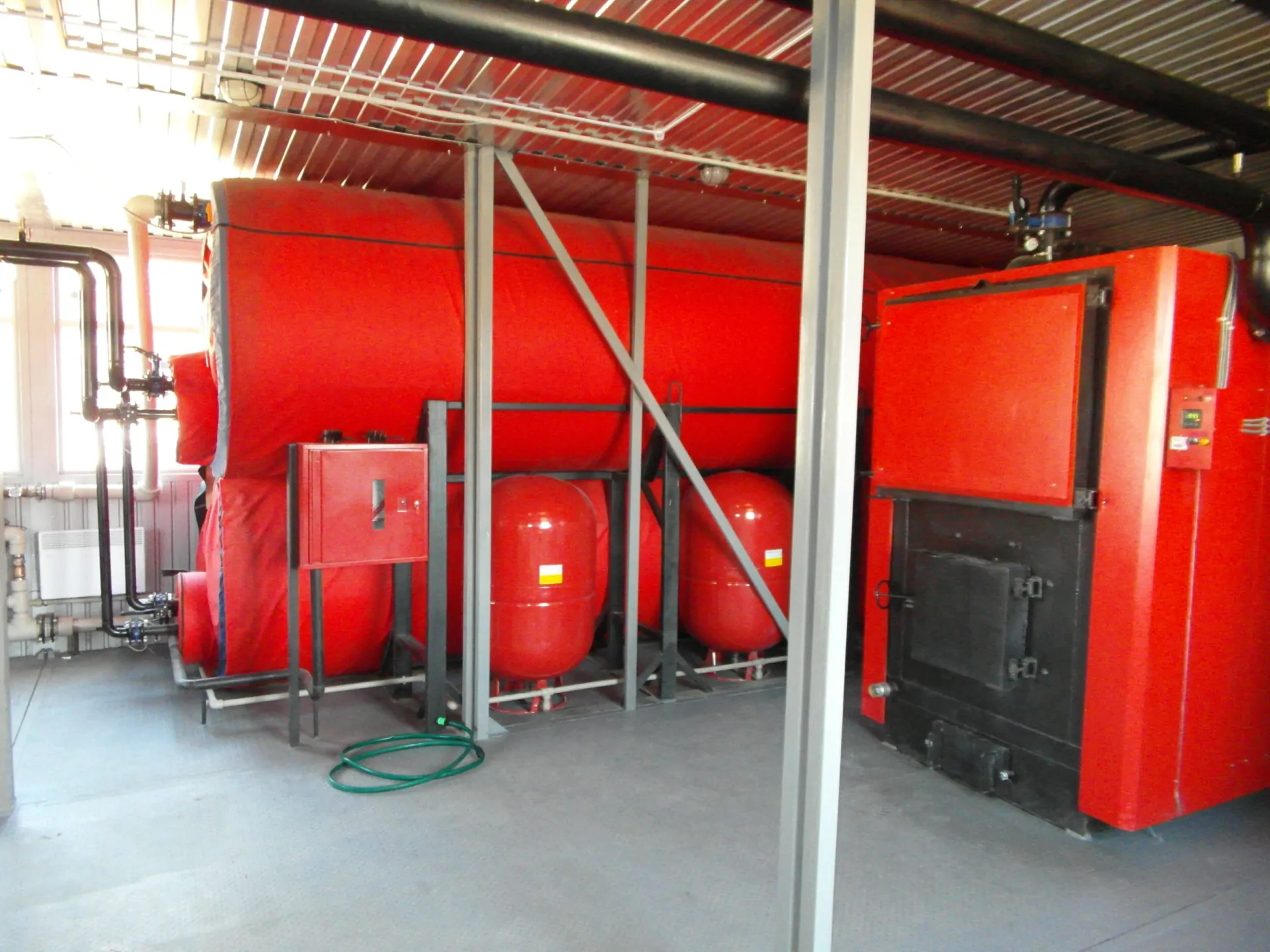
A plant may include boilers, burners or other firing equipment, circulation and make-up pumps, heat exchangers, headers and pipework. Isolation, control and safety valves, expansion vessels, monitoring instruments and metering equipment are also used.
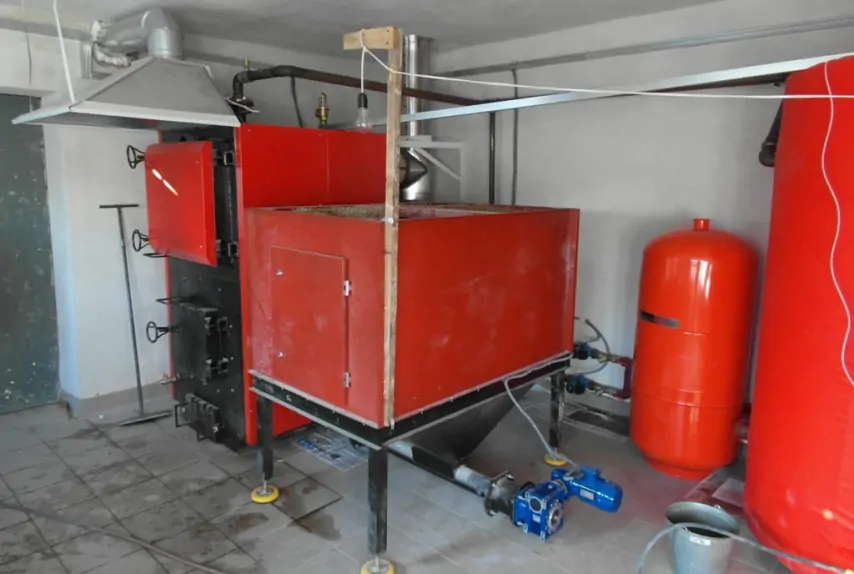
Where required, the design may include water treatment, fuel storage and feeding systems, chimneys and flues. Solid-fuel systems may also require fuel-feeding and ash-removal equipment. The final scope is defined by the process arrangement and selected equipment.
Automation and Safety Systems
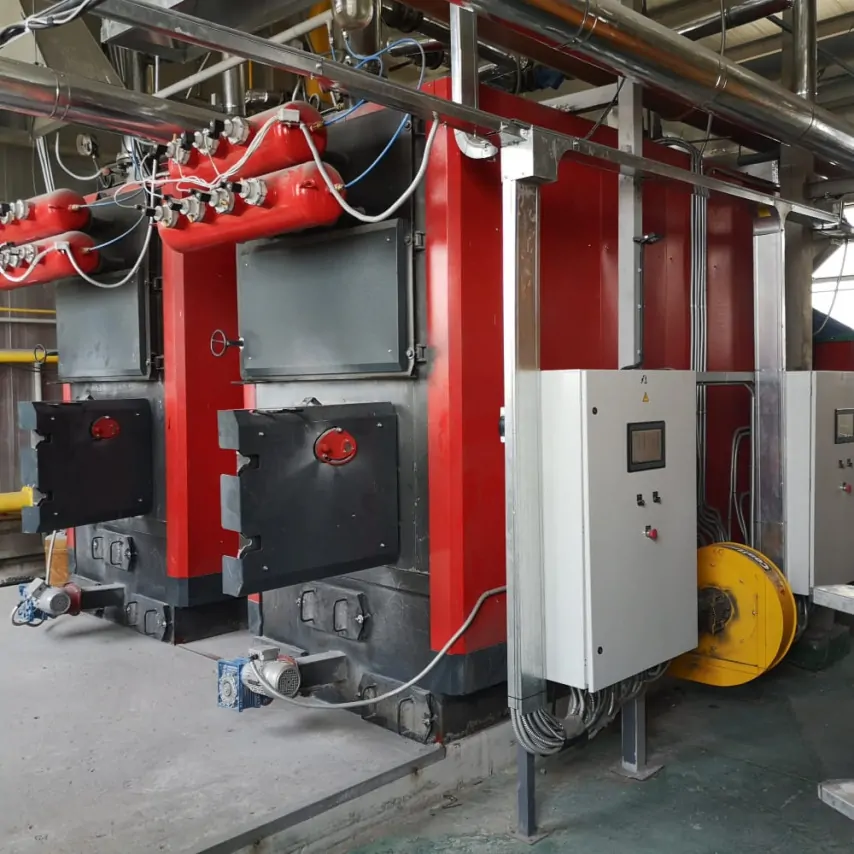
The control system maintains the specified temperature or pressure, manages the boilers, pumps and burners and may provide cascade sequencing where several heat generators are installed. It monitors safety-critical parameters and shuts down equipment under the emergency conditions defined by the design.
Data and alarms can be transmitted to a supervisory system, BMS or SCADA where specified in the project brief. The possibility of operation without continuous on-site staffing is determined by the approved design, the equipment type and applicable safety requirements.
How Does a Block-Modular Boiler Plant Operate?
The operating principle of a modular boiler plant is based on the conversion of energy and the transfer of heat to consumers:
- Fuel or electrical power is supplied to the heat-generation equipment.
- The fuel is combusted in the boiler, or electrical energy is converted into heat.
- Heat is transferred to water, a glycol solution, steam or another heat-transfer medium specified by the design.
- Pumping equipment circulates the heat-transfer medium between the boiler plant and the consumers.
- After releasing its heat, the cooled medium returns to the boiler plant.
- The control system monitors operating parameters and adjusts output to match the actual load.
Fuel-feeding, flue-gas and combustion-product removal systems are used only in the relevant fuel-fired plants. An electric boiler plant has no combustion process or flue gases.
Which Fuels Can the Boiler Plant Use?
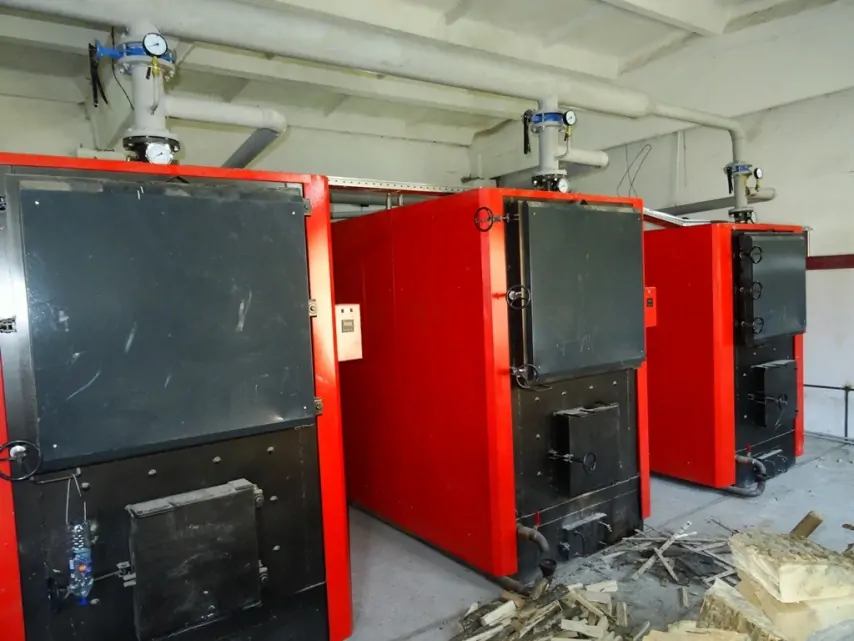
The energy source may be natural gas or liquefied petroleum gas (LPG), pellets, firewood, wood chips, briquettes, coal, diesel, heating oil, heavy fuel oil or electricity. For gas-fired applications, TFE designs gas-fired boiler plants. For biomass and other solid fuels, it provides solid-fuel boiler plants. Where electricity is the energy source, electric boiler plants are used.
Where changeover between primary and backup energy sources is required, multi-fuel boiler plants can be considered. No single fuel is universally the most cost-effective: selection depends on availability, cost, logistics, required capacity, load profile and site-specific requirements.
Where Are Modular Boiler Plants Used?
Modular solutions are used at industrial and manufacturing facilities, agricultural complexes, farms, greenhouses and grain-drying sites. They are also suitable for warehouses, logistics and residential developments, hotels, retail premises and office buildings.
The plant can heat hospitals, educational and public-sector facilities, municipal infrastructure, construction sites and remote locations. It can also serve as a backup or peak-load source.
An industrial modular boiler plant is not a ready-made universal solution for every site. Its suitability and location must be assessed individually, taking account of the facility’s use, surrounding development, capacity, fuel, available utilities and regulatory constraints.
Advantages and Limitations of Modular Construction
Factory completion allows systems to be assembled and checked in advance and reduces installation work on site. Other advantages include a compact arrangement, automation, supervisory control and staged capacity expansion where the design allows it.
Relocation is possible only where the construction has been designed accordingly. It still requires disconnection, transport, reinstallation, reconnection to utilities and the necessary inspections.
The site or foundation must be prepared in advance, and the plant must be connected to the relevant utilities. The configuration is constrained by transport dimensions. Fuel-fired solutions require fuel storage and handling, ventilation, flue-gas systems and appropriate fire and process-safety measures. Commissioning and inspections are completed after installation.
What Should Be Considered During Design and Commissioning?
Modular boiler plant design begins with heat loads, facility use, fuel, heat-transfer medium and operating profile. The assessment also covers location, utilities, class of consequences, gas installations, pressure equipment and stationary emission sources.
Technical solutions must comply with applicable Ukrainian State Building Codes (DBN) for boiler plants, gas supply and fire safety, occupational safety and technical operation rules, and air-protection legislation. There is no universal permit package: the documentation, approvals and procedures depend on the facility and current regulations.
A turnkey boiler plant covers more than module fabrication. It includes site assessment, load calculations, design, site preparation, utility connections, installation, commissioning and final handover. This is the approach used to deliver turnkey industrial modular boiler plants.
A block-modular boiler plant is a flexible option for independent, backup or process heat supply, but its configuration cannot be selected solely by the required capacity. Heat loads, available fuel, operating profile, utility parameters, installation location and the required level of automation must all be considered.
TeploFormat Engineering specialists will help determine the required capacity, select the appropriate block-modular boiler plant configuration and prepare a preliminary estimate for your facility.